
How to Brew Loose Leaf Tea Without an Infuser

How to Brew Loose Leaf Tea Without an Infuser
-

10 November 2026

 clear my headfor the 3 pm fog.
 cheer me uppink, fruity, a little extra.
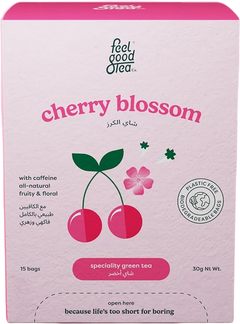 wake me upfor mornings that start without asking.
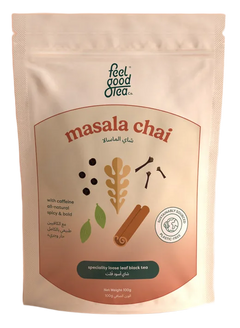
every box takes their name. Dubai gets it in 1–3 hours.
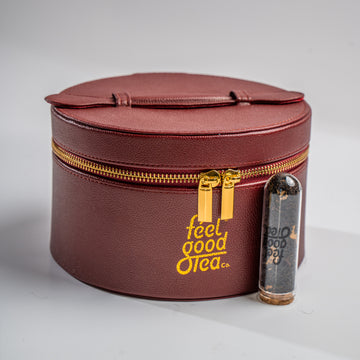
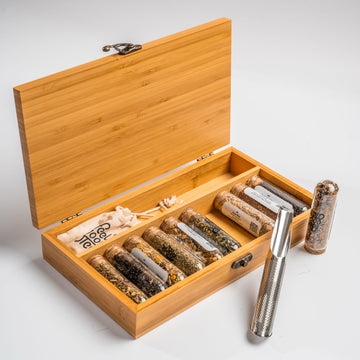





tell it how today went. it picks your boost. it does not judge. (it's a robot.)
10 November 2026
Last Updated: October 28, 2026
Quick Summary
You can brew loose leaf tea without an infuser by steeping the leaves directly in your cup, then straining them out with a sieve or coffee filter. Use about 1 teaspoon of leaves per 250 ml of water, and match the water temperature and steep time to your tea type.
Loose leaf tea does not need a special infuser to taste good. Tea leaves release flavor into hot water on their own, and a few simple household tools can hold them back when you pour. You can start today with what is already in your kitchen.
Loose leaf tea is simply whole or broken tea leaves that have not been packed into paper bags. Those leaves need room to open up, which is why they taste fuller than most bagged tea. The only real job of a tool is to separate the leaves from the liquid once the tea is ready.
Here is what you actually need:
A common mistake is buying an expensive infuser before trying the simpler methods. Start with what you have. You can always upgrade later once you know which style you enjoy.
Steeping time and water temperature change the taste of your cup more than most people expect. Too hot or too long, and the tea turns bitter. Too cool or too short, and it tastes flat.
Use this as a starting point:
| Tea Type | Water Temperature | Steep Time |
|---|---|---|
| Green tea | 70-80°C | 2-3 minutes |
| White tea | 75-85°C | 3-4 minutes |
| Oolong tea | 85-95°C | 3-5 minutes |
| Black tea | 95-100°C | 3-5 minutes |
| Herbal blends | 95-100°C | 5-7 minutes |
Delicate green and white teas scorch easily, so let boiled water cool for a minute before you pour. Stronger black teas and herbal blends handle full heat well.
Taste your tea after the first brew. If it is too weak, steep a little longer next time. If it is bitter, cut the time back.
Getting the right amount of leaves matters just as much as timing. A simple rule works well for most teas: use about 1 teaspoon of loose leaves for every 250 ml (one cup) of water.
Here is how to scale it:
Fluffy, light herbal blends take up more space, so you may need a bit more than a teaspoon. Dense, rolled teas pack tighter, so start with less and adjust.
If you brew for a group, scale the leaves and water together. Do not add more water alone, because that dilutes the flavor and makes the cup taste thin.
Watch out: pouring too much water into a small cup can overflow and make a mess. Leave a little room at the top.
The simplest way to brew loose leaf tea is to steep it directly in your cup. You put the leaves in, pour hot water over them, wait, and then sip carefully while keeping the leaves out of your mouth.
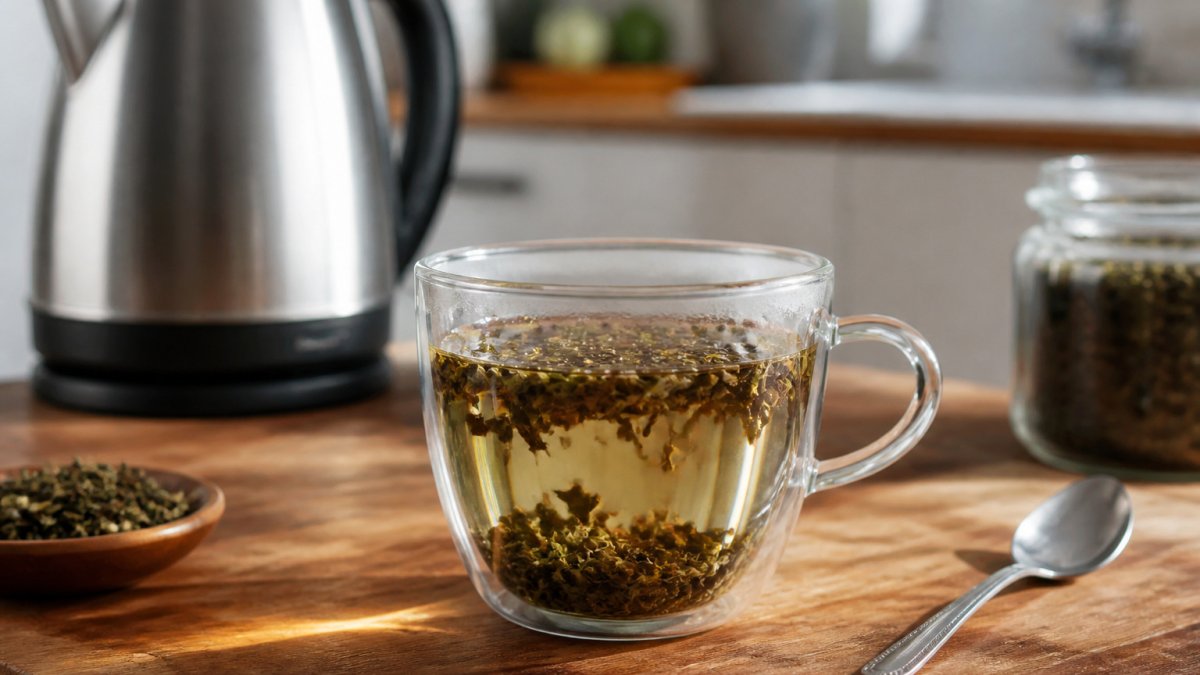
Follow these steps:
Some leaves will float, and a few will drift into your sip. That is normal. Let the leaves sink before drinking, or hold them back with a small spoon when you pour the last of the tea.
This method works well for a single cup. It is fast, requires no cleanup beyond the cup itself, and gives you full control over steep time.
If you want cleaner tea with fewer leaves in the cup, the tool you choose changes the effort, the clarity of the liquor and the cleanup. Here is how the three most common workarounds actually compare.
| Method | Equipment | Effort | Clarity of tea | Cleanup | Best for |
|---|---|---|---|---|---|
| Paper coffee filter | Filter + sieve or funnel + cup | Low | Highest, catches fine dust | Throw filter away, rinse sieve | Fine or dusty leaves, single cups |
| French press | Press + cup | Medium | High, mesh holds most leaf | Rinse mesh, dislodge leaves from plunger | Black tea, larger batches, 2-4 cups |
| Lidded cup or teapot | Cup with lid or teapot + sieve | Low | Medium, some floaters escape | Rinse cup, empty sieve | Grandpa-style sipping, whole-leaf oolong |
Coffee filter: Place a paper coffee filter in a sieve or over a cup, add your leaves to the filter, and pour hot water through it. The paper catches fine particles that a sieve misses, which matters for broken or dusty leaves. It works best for medium-sized leaves; very fine dust can clog the paper and slow the pour, so wet the filter first and pour in a steady stream. Use unbleached, food-grade paper and discard it after one brew.
French press: Add the leaves and hot water to the press, wait for the steep time, then press the plunger down slowly. The mesh holds back most leaf, and the plunger gives you a clean pour for two to four cups at once. This is a strong option for black tea and larger batches. Pour the tea out right away so it does not keep steeping against the leaves, and rinse the mesh before the next brew so old leaf does not turn the next cup bitter.
Lidded cup or teapot: Put the leaves in the cup, add water, and cover it with a lid. When the steep time ends, pour through a strainer or hold the lid back to pour out the liquid while keeping the leaves inside. The lid traps heat, which helps black tea and oolong steep evenly, but it does not filter, you still need a sieve or a steady hand at the pour.
Pick the method that matches how many cups you want and how much cleanup you are willing to do. For more alternative brewing tools, see our guide to tea accessories for daily brewers. For a single quick cup, the coffee filter wins on clarity. For a pot shared with others, the French press wins on volume. For slow sipping, the lidded cup wins on simplicity.
Once your tea is ready, separate the leaves carefully. Hot water and loose leaves can burn your fingers or spill, so take your time. This is also where most home brewers go wrong: they strain once, leave the leaves sitting in the liquid, and the cup turns bitter while they drink it.
Food-safe materials for hot tea. Use only materials intended for hot food and drink:
Avoid painted or coated metal that can chip, plastic that softens or smells at near-boiling temperatures, and any container previously used for chemicals, cleaning products or non-food liquids. A sieve that has sat in a drawer with residue is not a tea tool.
Separating methods, ranked by clarity:
Make sure the tool sits firmly on the cup so it does not tip when you pour. Pour away from your body and keep your hands clear of the steam. If the tea is very hot, let it cool a little before you handle the strainer.
Brewing more than one cup without leaves in the cup. For a batch, brew in a teapot or French press at the full ratio, then decant the whole batch into a second vessel through a strainer as soon as the steep time ends. Do not leave the leaves in the brewing vessel between cups, they keep extracting and the second cup turns harsh. If you want to hold the tea warm, decant into a pre-warmed thermos or teapot, not back onto the leaves.
If your tea does not taste right, check these common problems:
Many leaves can be steeped more than once. Try a second infusion with slightly longer time, and notice how the flavor changes. Remove the leaves once you finish to stop the tea from getting too strong.
When you are ready to try new brewing styles, start with the method you find easiest and expand from there. Explore the full collection and choose your next cup with confidence.
Put the measured leaves straight into a cup or teapot, pour hot water over them, and steep for the recommended time. Once steeped, separate the leaves using a fine-mesh strainer, a coffee filter, or by pouring slowly through a lid. Loose leaves expand as they steep, so leave room in the cup and avoid overfilling. For a clean cup, use a French press or a lidded cup with a small gap for the liquid to flow out, and press or pour gently to keep fine particles out of your drink.
Yes. Place the leaves inside a paper coffee filter, tie or fold it closed, and drop the bundle into hot water. Remove it when the tea reaches your preferred strength. A coffee filter catches fine tea particles better than a loose cloth, so the cup stays clearer. Use a fresh filter and discard it after one brew, since the paper can taste of the leaves once it is wet.
Most black teas steep for 3 to 5 minutes in water near 95 to 100 degrees Celsius. Green teas do better at 70 to 80 degrees Celsius for 2 to 3 minutes, and white teas at about 75 to 85 degrees Celsius for 3 to 4 minutes. Oolong and herbal blends fall in between. Start at the low end of each range and taste, since longer steeping extracts more bitterness.
A common starting point is 1 teaspoon of loose leaves (about 2 to 3 grams) for every 250 millilitres of water, which is one standard cup. Adjust by about a quarter teaspoon at a time to find your preferred strength. Larger leaves such as whole-leaf green tea need more volume than fine blends, so measure by the teaspoon first and then refine it.
